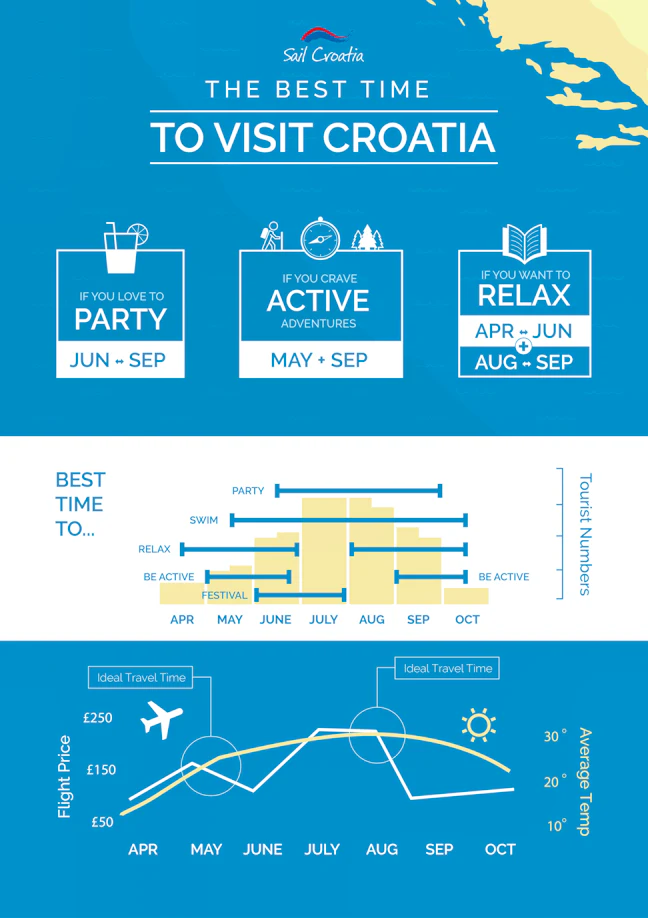
The best time to visit Croatia is from late May to early October, with the summer months offering a lively atmosphere and buzzing nightlife, whilst the shoulder months are perfect for sightseeing and exploring at a more relaxed pace.
Although this window offers the sunniest days, Croatia is a great destination year-round, with each season offering a different experience. Head to Croatia during the summer months of June, July and August to bask in the summer sun, explore historical old towns without the crowds during May and September or visit this Mediterranean gem during December to experience Christmas markets and snow-capped peaks.
Below we’ll dive into the best time to visit Croatia, no matter what type of holiday you’re planning!
At A Glance: The Best Time to Visit Croatia
- To explore: Visit in May, June or September for ideal cruising conditions, making it the perfect time to discover Croatia’s islands, historic towns, and hidden coastal gems.
- To party: Visit in July and August for hot weather (25-30°C), warm sea temperatures, lively beach clubs, festivals, and buzzing nightlife along the coast and islands.
- To relax: Visit in May, June, or September for warm sunny days, pleasant sea temperatures, fewer crowds, and a calmer atmosphere perfect for slow travel and coastal escapes.
- To be active: Visit in Spring and Autumn for milder temperatures, ideal conditions for sailing, hiking, cycling, and exploring, with seasonal winds like the Maestral creating great conditions on the water.
1. Weather in Croatia
Croatia doesn’t have the extreme weather differences that many European countries experience; however, there is still a considerable difference between peak season and off-peak weather conditions. Whether you're seeking sun-drenched beaches, vibrant festivals, or outdoor adventures, Croatia has something to offer every traveller in every season. Depending on the activities you would like to do, the weather in Croatia is certainly a contributing factor in determining when to visit.
Spring
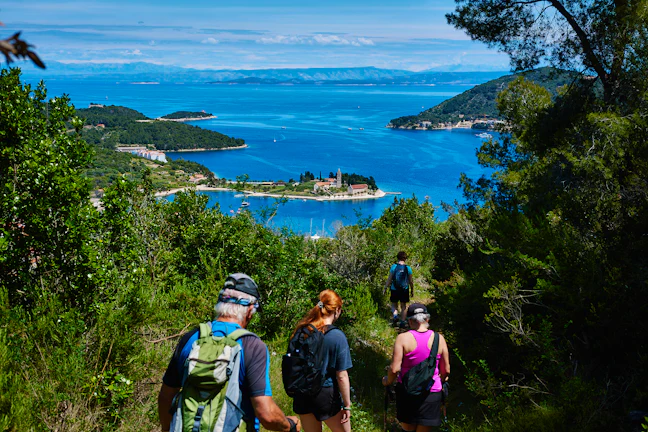
Spring sees temperatures begin to rise, and landscapes burst into bloom with colourful flowers, vibrant lavender and lush greenery. This is an ideal time for outdoor activities such as walking, cycling, and exploring Croatia's national parks. The crowds are relatively sparse during shoulder-season months, making it a great time to visit popular destinations like Dubrovnik and Krka National Park without the crowds. Spring is also the perfect time to cruise, with the sea temperature warming up to an ideal temperature for those who don’t mind a cool dip. Shoulder season prices also make cruising in April and May more affordable.
Summer
Summer is the peak tourist season in Croatia, and for good reason! With long days of sunshine and warm temperatures, it's the perfect time to hit the beaches and soak up the Mediterranean way of life. From iconic beaches to secluded coves, there's no shortage of places to enjoy the sun and sea between June and August. Whilst the summer months bring the sunshine, they also bring the crowds, so be prepared for tourist attractions, nightclubs and restaurants to be busy and prices to be higher during peak season months.
Autumn
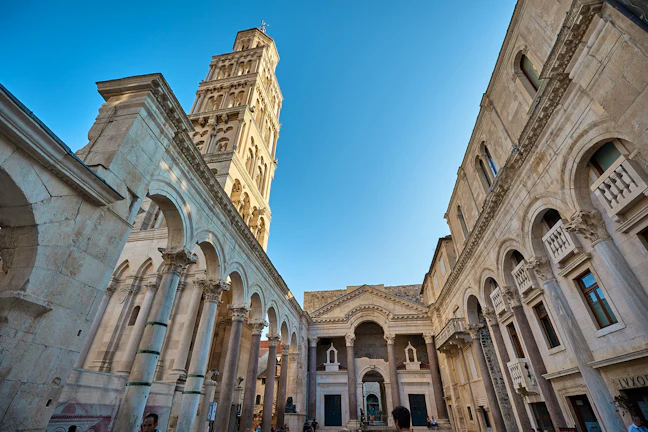
As summer turns into autumn, Croatia's landscapes take on a golden hue, and the temperatures become more comfortable for outdoor activities. Autumn is a great time to hike through Croatia's vineyards or cycle along glistening waterfront paths. Travellers begin to thin out, making it a quieter and more relaxed time to visit popular attractions such as Dicoletian’s Palace or the Dubrovnik City Walls. With mild temperatures and fewer crowds, Autumn is the ideal time for sightseeing, hiking, and cultural experiences.
Winter
Winter in Croatia brings cooler temperatures and occasional snowfall to mountainous areas, while the coastal areas enjoy milder weather. While some coastal towns may quieten down during the winter months, cities like Split and Zagreb come alive with festive markets and seasonal celebrations. Winter
2. Average Air Temperature in Croatia
Croatia enjoys a Mediterranean climate along the coast, characterised by hot, dry summers and mild, wet winters.
During the summer months temperatures along the coast average between 25°C to 30°C (77°F to 86°F), whilst Winters are mild, with temperatures averaging around 5°C to 10°C (41°F to 50°F).
3. Average Sea Temperature in Croatia
Sea temperatures vary throughout the year, with the warmest waters occurring in the summer months.
The sea temperatures reach their peak during the summer months, ranging from 22°C to 27°C (72°F to 81°F). Sea temperatures cool down during winter, averaging around 12°C to 15°C (54°F to 59°F).
4. Rainfall Patterns in Croatia
Rainfall in Croatia varies depending on the region and the time of year. Coastal areas receive less rainfall compared to inland regions, particularly during the summer months.
Summers in Croatia are generally dry, with minimal rainfall. However, occasional thunderstorms may occur, particularly in the late afternoon or evening, so it’s always best to pack accordingly!
5. Wind Conditions in Croatia
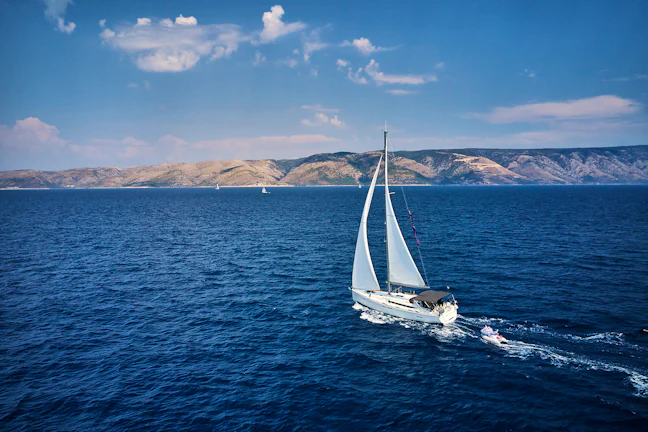
Winds play a significant role in Croatia's climate, particularly along the coast where they can influence weather patterns and sea conditions. There are many unique winds in Croatia making it a varied and exciting destination for sailors. Some of the most common winds in Croatia are:
Bura
A cold, dry wind that blows from the northeast, particularly during the winter months. Bura winds can be strong, reaching gale-force speeds, but they also bring clear skies and cooler temperatures.
Jugo
A warm, humid wind that blows from the southeast, and is typically associated with unsettled weather and rain. Jugo winds are more common in the autumn and winter months.
Maestral
A refreshing sea breeze occurs during the summer months, bringing relief from the heat along the coast. Maestral winds are most prevalent in the afternoon and are favoured by sailors and beachgoers alike.
6. Month by Month Weather in Croatia
January
Average air temp: 5-10°C
Average sea temp: 12-14°C
Cruising conditions: Cool with occasional rain and stronger winds; ferries and cruises may have schedule changes.
Crowds: Very quiet
Ideal for: City breaks, cultural travel, winter scenery, low-season travel
February
Average air temp: 6-11°C
Average sea temp: 11-13°C
Cruising conditions: Similar to January with cooler seas and less reliable sailing weather.
Crowds: Very quiet
Ideal for: Budget travel, local experiences, quieter coastal towns
March
Average air temp: 9-14°C
Average sea temp: 12-14°C
Cruising conditions: Improving conditions with more sunshine, though seas can still be rough.
Crowds: Low
Ideal for: Sightseeing, hiking, early spring travel
April
Average air temp: 13-18°C
Average sea temp: 14-16°C
Cruising conditions: Pleasant and increasingly stable, though sea temperatures are still cool for swimming.
Crowds: Low to moderate
Ideal for: Island hopping, national parks, active travel, shoulder season trips
May
Average air temp: 18-23°C
Average sea temp: 17-19°C
Cruising conditions: Great sailing weather with longer sunny days and calmer seas.
Crowds: Moderate
Ideal for: Cruising, sightseeing, outdoor activities, quieter beach trips
June
Average air temp: 24-28°C
Average sea temp: 22-23°C
Cruising conditions: Excellent conditions with warm weather, calm seas, and long daylight hours.
Crowds: Busy but manageable
Ideal for: Swimming, island hopping, beach holidays, sailing
July
Average air temp: 28-32°C
Average sea temp: 24-25°C
Cruising conditions: Peak cruising season with hot sunny weather and ideal sea conditions.
Crowds: Very busy
Ideal for: Beaches, nightlife, festivals, swimming, summer cruises
August
Average air temp: 28-33°C
Average sea temp: 25°C
Cruising conditions: Hot, sunny, and perfect for being on the water, though marinas and islands are busiest.
Crowds: Peak season crowds
Ideal for: Beach clubs, sailing, swimming, island parties, summer holidays
September
Average air temp: 23-28°C
Average sea temp: 23-24°C
Cruising conditions: One of the best months for cruising with warm seas, sunny days, and calmer crowds.
Crowds: Moderate
Ideal for: Cruising, swimming, relaxed beach holidays, photography
October
Average air temp: 18-23°C
Average sea temp: 20-22°C
Cruising conditions: Generally pleasant early in the month, with increasing chances of rain later on.
Crowds: Low to moderate
Ideal for: Scenic travel, food and wine trips, hiking, quieter coastal escapes
November
Average air temp: 12-17°C
Average sea temp: 17-19°C
Cruising conditions: Cooler and less predictable with more rain and wind.
Crowds: Quiet
Ideal for: Slow travel, cultural experiences, off-season escapes
December
Average air temp: 7-12°C
Average sea temp: 14-16°C
Cruising conditions: Cool and off-season, with limited tourism services in some coastal areas.
Crowds: Very quiet except Christmas markets
Ideal for: Festive city breaks, winter travel, local experiences
7. Budget Considerations
Like all travel planning, budget plays a vital role in deciding where and when to go. Prices will fluctuate dramatically throughout the year and affect everything from flights, accommodation, tours and even food. To help you make the most of your travel budget, here are some key things to consider when planning your trip.
Accommodation Prices
From hostels to Airbnb’s, mid-range hotels and luxury villas, there is an accommodation type for every traveller. Regardless of the type of accommodation you book, the prices will always fluctuate depending on the time you choose to travel. The cheapest accommodation prices will be found during the shoulder season those shoulder months of April – June & September – October, with prices increasing throughout the peak summer months.
The same price variations are also true for our cruises. June – August sees prices reach their peak, whilst the shoulder months of April – June & September – October will offer cheaper cruising options. Is there a difference in quality and service? Absolutely not!
Flight Prices
Flights to Croatia are considerably cheaper during the shoulder months (April – June & September – October), as demand drives flight prices up during the peak season.
To save money on flights, consider travelling during the shoulder season, outside of school holidays and booking your flights in advance.
You can also consider flying into an alternative Croatian airport such as Split or Zadar instead of Dubrovnik or Zagreb, as they may offer cheaper flights, especially if you're flexible with your travel dates and willing to explore different arrival and departure options.
8. When is the Best time to visit Croatia?
There is no definitive answer to this question – the best time to visit Croatia will vary considerably depending on your travel style, plans whilst visiting the country and the weather. Most travellers will head to Croatia to either party, relax or be active, so we’ve listed the best times to visit based on these three key factors!
The Best time to visit Croatia to party
The summer months of June, July and August are the best times to visit Croatia if you’re looking to party! The summer heat brings with it open-air beach clubs, world-renowned music festivals, and iconic nightlife options - Croatia is truly buzzing!
Choose to head one of Croatia’s famous music festivals or join a Party Cruise to take in the best party locations Croatia has to offer.

The Best Time to Visit Croatia on a Cruise
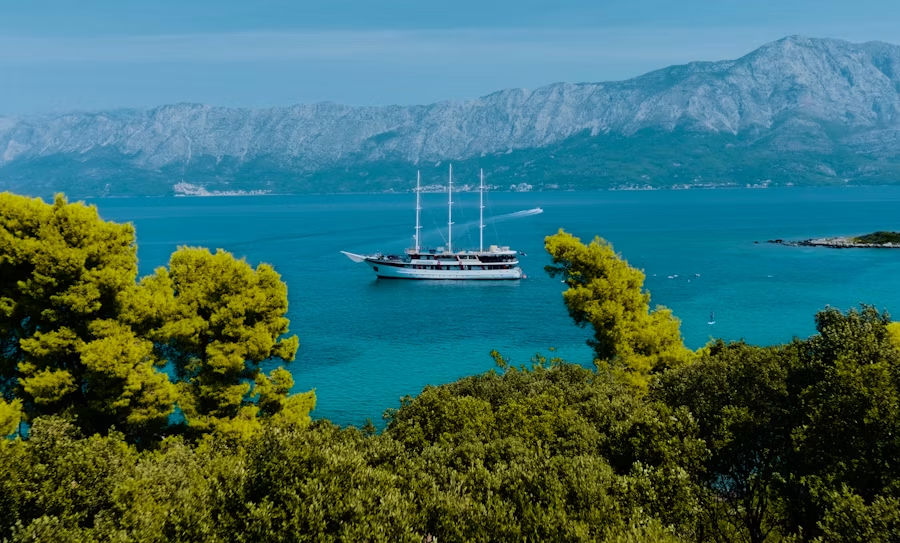
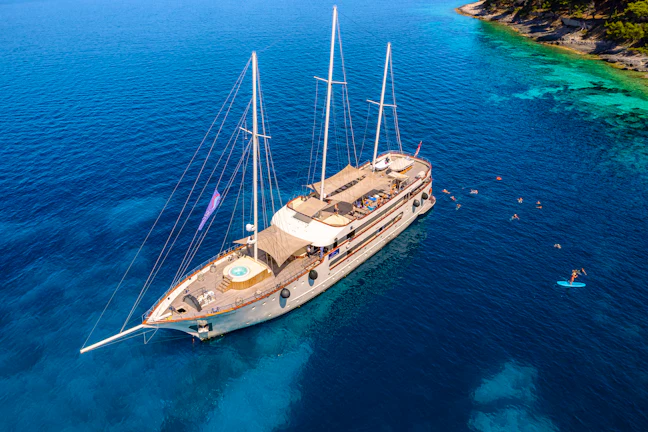
May, June, and September are often considered the best times to visit Croatia on a cruise. During these shoulder season months, the Adriatic offers warm weather, calm sailing conditions, and fewer crowds, creating the perfect balance between relaxation and exploration.
Cruising Croatia allows travellers to experience multiple islands and coastal towns in one trip, with plenty of opportunities for swimming, waterfront dining, and discovering hidden bays along the Dalmatian Coast.
The Best time to visit Croatia to relax
If you’re seeking some rest and relaxation during your Croatian vacation, the shoulder season months of April and May, and September and October are the best times to travel! The islands are quieter during these months, with a laid-back atmosphere and fewer tourists, giving travellers an insight into authentic Croatia.

The best time to visit Croatia to be active
April and May are the ideal times to explore Croatia on two wheels, or two feet! With mild temperatures and flora and fauna in full bloom, Spring is the perfect time to get active.
Find the perfect time to explore Croatia based on your interests: